12/13/2025

The Triad of Modern Leadership: Tech, Strategy, and Psychology in the Age of AI

 The archetype of the successful manager has been rewritten. For decades, the dominant management philosophy was rooted in "Scientific Management"—a system designed for factories, optimizing for efficiency, repeatability, and strict hierarchy. In that world, the manager was a controller.

Today, we operate in a "Knowledge Economy" amplified by Artificial Intelligence. The variables have changed. Efficiency is no longer the only goal; innovation and adaptability are. The controller is obsolete; the orchestrator is required.

To lead a company successfully through the modern gauntlet of challenges, a manager must master a convergence of three distinct disciplines: Technological Fluency, Asynchronous Strategy, and Psychological Safety.

Here is an analytical breakdown of these three pillars.


1. Technological Fluency: Beyond Basic Literacy

In the past, technology was a department. IT handled the computers; managers handled the people. This siloed approach is now a liability. Technology has become the central nervous system of every modern organization.

The Shift from Intuition to Data-Driven Decisions The modern manager acts as a bridge between raw data and business strategy. It is no longer sufficient to rely on "gut feeling" or tenure-based experience. Analytical depth requires Data Literacy—the ability to read, understand, and communicate data as information. A manager doesn't need to code in Python, but they must understand the logic of data analytics. They need to know what questions to ask their data scientists. If a manager cannot distinguish between correlation and causation in a sales report, they are flying blind.

AI Augmentation: The "Centaur" Model The conversation around AI often centers on replacement. However, the analytical view is one of augmentation. The most successful modern managers are adopting the "Centaur" model (half-human, half-machine). They use Large Language Models (LLMs) to handle cognitive grunt work—drafting, summarizing, and pattern matching—freeing up their mental bandwidth for high-level strategy and creative problem-solving. The skill here is not just "prompt engineering," but workflow integration: knowing exactly which parts of a process can be automated without losing quality.

2. The Managerial Pillar: Asynchronous & Outcome-Based

The traditional 9-to-5 model was built on presence. If you were at your desk, you were working. The rise of remote and hybrid work has shattered this illusion, revealing that presence does not equal productivity.

The Death of Synchronous Dependency One of the greatest bottlenecks in modern companies is the reliance on synchronous communication (meetings). A deep analytical manager understands the cost of interruption. Every time a team is pulled into a "quick sync," their "Deep Work" state is broken. The solution is Asynchronous Mastery. This is the ability to manage through documentation, written briefs, and recorded updates. It requires a higher level of clarity in communication. When you cannot rely on body language or immediate feedback, your instructions must be flawless. This shift turns "writing" into a primary management skill.

Managing Outcomes, Not Inputs Transitioning to outcome-based management requires a fundamental psychological shift. It means abandoning the comfort of micromanagement. Instead of monitoring how or when the work is done (the inputs), the modern manager focuses strictly on the results (the outcomes). This requires setting clear, measurable KPIs (Key Performance Indicators) and trusting the team to navigate the path to those goals.

3. The Psychological Pillar: EQ as a Strategic Asset

Perhaps the most counter-intuitive development in the tech-heavy era is that soft skills have become hard currency. As AI takes over logical and analytical tasks, the uniquely human traits—empathy, negotiation, and morale building—become the manager's primary value proposition.

The ROI of Psychological Safety Google’s internal study, "Project Aristotle," revealed that the single most important predictor of a high-performing team is Psychological Safety. This is not about being "nice"; it is about creating a culture where employees feel safe to take risks and admit mistakes without fear of punishment. Analytically speaking, fear inhibits the prefrontal cortex, killing creativity. A manager who rules by fear is literally making their team less intelligent. The modern leader must actively cultivate an environment of "Radical Candor," where challenge is encouraged, and failure is viewed as data for improvement, not a reason for termination.

Cognitive Empathy and Burnout Defense We are facing a global burnout crisis. The modern manager must act as a firewall between organizational pressure and team well-being. This requires Cognitive Empathy—the ability to understand someone else's perspective intellectually, not just emotionally. It involves recognizing the subtle signals of burnout (cynicism, detachment, reduced efficiency) before they become critical. It means understanding that sustainable pace yields better long-term results than "crunch culture."

Conclusion: The Renaissance Manager

The modern manager is no longer a specialist in one narrow field. They are a generalist—a "Renaissance figure" capable of discussing API integrations in the morning, optimizing operational workflows at lunch, and coaching a struggling employee through a crisis in the afternoon.

The path forward is not about choosing between technology and psychology. It is about integrating them. The technology provides the leverage; the psychology provides the motivation; and the management strategy provides the direction. Mastering this triad is the only way to navigate the complexities of the future.


Top 5 AI Tools That Will Skyrocket Your Small Business Productivity in 2026

12/09/2025

Liquid vs. Logic Board: The Ultimate Guide to Saving a Wet Laptop (Beyond the Rice Myth)


Introduction: It happens in slow motion. The knock, the spill, the splash. Whether it’s water, sugary coffee, or a craft beer, liquid is the mortal enemy of electronics. But here is the harsh reality: the liquid itself isn’t usually what kills your laptop. It’s the electricity interacting with that liquid.

In this guide, we are moving beyond the panic. We will explore the science of galvanic corrosion, explain why the "bag of rice" trick is actually dangerous for your hardware, and outline the only scientifically proven method to resurrect a water-damaged machine.


Phase 1: The "Golden Minute" (Critical Response)

While the subsequent cleanup requires patience, your first 60 seconds determine if the laptop survives at all. The goal is simple: Stop the electrolysis.

Electrolysis occurs when an electrical current flows through a liquid, causing metals to migrate and corrode instantly. To stop it, you must kill the power source.

  1. The Hard Kill: Do not use the mouse to shut down Windows. Hold the physical power button for 5-10 seconds until the machine dies.

  2. Sever the Power: Unplug the AC adapter immediately.

  3. Battery Removal (If possible): If your laptop has an external battery, pull it. If it’s an ultrabook with an internal battery, proceed immediately to the draining phase.

Pro Tip: Never flip the laptop right-side up to "check if it works." This allows gravity to pull the liquid further down into the motherboard layers.


Phase 2: Understanding the Enemy (Fluid Dynamics)

Not all spills are created equal. Understanding what you spilled dictates your recovery strategy.

  • Water: The "best" case scenario. It is conductive but typically leaves minimal residue once fully evaporated.

  • Sugary Drinks (Soda/Coffee): These are the silent killers. As the water evaporates, it leaves behind a conductive, sticky syrup. This residue attracts dust and holds moisture, meaning corrosion can continue weeks after the accident.

  • Alcohol/Beer: Highly acidic. Acid eats through the protective coatings on the motherboard traces and solder points much faster than water.


Phase 3: The Great Rice Deception

You have heard it a thousand times: "Put it in rice!" Do not do this.

As a tech resource, we need to debunk this myth permanently. Here is why rice is a bad idea:

  1. It's too slow: Rice is a passive desiccant. By the time it absorbs ambient moisture, corrosion has already set in.

  2. The Starch Problem: Rice dust and starch can enter the laptop’s cooling vents and USB ports. When mixed with the spilled liquid, this creates a paste that essentially cements the damage inside your machine.

The Solution? Airflow. Position the laptop in an inverted V-shape (tent mode) in a dry, warm room with active airflow (a fan blowing across it, not directly into the vents).


Phase 4: The Advanced DIY Fix (For the Tech-Savvy)

Disclaimer: This section requires opening your device. Proceed at your own risk.

If you spilled anything other than pure water, simply drying it out isn't enough. You need to remove the chemical residue.

  1. Open the Chassis: Remove the back panel to expose the motherboard.

  2. Disconnect the Battery: This is the priority connector.

  3. Inspection: Look for white or green crusty deposits on the chips (this is oxidation).

  4. The Magic Solvent: Use 99% Isopropyl Alcohol (IPA). Do not use rubbing alcohol (which is often only 70% alcohol and 30% water).

  5. The Clean: Use a soft toothbrush dipped in 99% IPA to gently scrub the affected areas. The alcohol will dissolve the sticky residue and displace the water, then evaporate almost instantly.


Summary: When to Call a Pro

If the spill involved a significant amount of sugary liquid, or if the laptop was running for minutes while wet, the liquid may have bridged critical power rails (like the CPU power line). In this case, professional ultrasonic cleaning is the only reliable fix.

Bottom line: Patience saves hardware. Never power on a wet laptop sooner than 48 hours after the incident.

------------------------------------------------------------------------------------------------------------------------


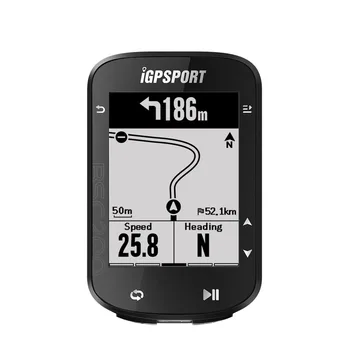
IGPSPORT BSC200 GPS Bicycle Computer Cycling Odometer Wireless Speedometer Route Navigation ANT + Bluetooth5.0 Accessories


12/08/2025

How AI and Digital Tools Are Rewiring Human Knowledge and Intelligence


The Cognitive Shift of the 21st Century — and How to Adapt

For the first time in human history, intelligence is no longer confined to the brain.
We have externalized memory, outsourced problem-solving, and automated thinking processes that once defined human capability.

Smartphones remember what we forget.
Search engines replace curiosity.
AI assistants write, analyze, translate, and predict faster than we can imagine.

Human knowledge is evolving — not by addition, but by integration with digital systems.
This article explores how AI and digital tools are fundamentally rewiring our cognition, behavior, memory, and decision-making — and how we can use this shift to our advantage.


1. Cognitive Offloading: The Brain Now Works in Tandem With Machines

Modern humans rely on technology to perform tasks that once required mental effort:

  • Remembering phone numbers

  • Navigating the world

  • Calculating

  • Summarizing information

  • Scheduling tasks

  • Translating languages

  • Organizing knowledge

This process is called cognitive offloading — we “offload” mental workload onto devices.

Positive effects

✔ More mental space for creativity
✔ Faster access to information
✔ Reduced cognitive stress
✔ More efficient daily living

Negative effects

✘ Declining memory retention
✘ Shortened attention span
✘ Reduced tolerance for slow thinking
✘ Difficulty learning deeply

Example:
Before GPS, people built mental maps.
Today, navigation apps do it for us — improving efficiency, but reducing spatial memory skills.

We’re not becoming less intelligent — but our intelligence is redistributing.


2. AI as a Cognitive Partner — Not a Replacement

Contrary to popular fear, AI is not replacing human intelligence.
It is augmenting it.

Modern AI tools act as:

  • assistants

  • analysts

  • translators

  • teachers

  • editors

  • researchers

  • problem solvers

Real-world example

A student writing a research paper can use AI to:

  1. Summarize academic sources

  2. Generate structure suggestions

  3. Translate foreign literature

  4. Provide clarity edits

  5. Suggest data visualization

The student still makes decisions — but AI accelerates every step.

AI becomes a cognitive amplifier.


3. Digital Learning: The End of Knowledge Scarcity

For thousands of years, knowledge was scarce:

  • books were expensive

  • universities limited

  • teachers unavailable

  • information centralized

Today, knowledge is abundant:

  • online courses

  • YouTube tutorials

  • academic databases

  • open-source platforms

  • AI-powered explainer tools

What this means

Learning is no longer about access — but about:

  • filtering

  • prioritizing

  • understanding

  • applying

The challenge is not finding information, but choosing which information matters.


4. The Rise of “Just-In-Time Learning”

Modern humans no longer learn everything upfront.
We learn only when needed — at the moment of relevance.

Examples:

  • Watching a tutorial right before repairing something

  • Asking AI to explain a concept minutes before a meeting

  • Taking a micro-course the evening before a job interview

This new model is efficient, but creates a dependency:

We become experts only temporarily, forgetting knowledge quickly after use.


5. How AI Changes Problem-Solving and Creativity

AI doesn’t kill creativity — it changes its structure.

Old model:

Creativity = original thinking + manual execution.

New model:

Creativity = human intention + AI-powered execution.

Examples:

  • Designers use AI for rapid prototyping

  • Programmers use AI to generate code snippets

  • Writers use AI for structure or brainstorming

  • Business owners use AI for market analysis

Humans focus on direction, AI handles production.

This is not the death of creativity — it is the evolution of creative workflow.


6. The Downside: Overdependence and Shallow Thinking

We must also confront the risks:

1. Information Overload

More data than we can process = poorer decisions.

2. Reduced Deep Work

Notifications fragment attention.

3. Superficial Understanding

We skim instead of thinking.

4. Loss of Personal Judgment

AI suggests answers — but not necessarily the right ones.

5. Algorithmic Influence

Recommendations shape opinions without us noticing.

These risks require intentional digital habits.


7. How to Use AI to Strengthen — Not Weaken — Your Intelligence

Here are practical strategies to thrive cognitively in the digital era:


Strategy 1: Use AI for Expansion, Not Substitution

Ask AI to explain complex concepts, not to think for you.
Use it as a teacher, not a replacement.


Strategy 2: Alternate Between “AI Mode” and “Deep Work Mode”

Set specific hours:

  • one for fast AI-assisted tasks

  • one for uninterrupted deep thinking

Your brain needs both speeds.


Strategy 3: Learn Foundational Skills Without AI

Examples:

  • math fundamentals

  • reading comprehension

  • writing clarity

  • logical reasoning

These are human skills that AI cannot fully replace.


Strategy 4: Build Knowledge Systems, Not Just Memories

Use digital tools:

  • note-taking apps

  • mind maps

  • flashcards

  • bookmarking systems

Knowledge today is organizational, not memorized.


Strategy 5: Stay Curious — Curiosity Cannot Be Automated

AI can answer questions.
But only humans can ask new ones.

Curiosity remains the core of intelligence.


8. What Happens to Human Nature Next?

AI will not make humans obsolete — it will make us different.

Future humans will have:

  • greater cognitive reach

  • less reliance on memory

  • faster decision-making

  • blended human-machine intelligence

  • new creative processes

  • new forms of literacy

The question is not:
“Will AI change human intelligence?”

It already has.
The real question is:
“Will we shape this change intentionally — or let it shape us?”


Conclusion: We Are Becoming Hybrid Thinkers

Human intelligence is evolving from:

  • individual → networked

  • memory → access

  • slow reasoning → augmented thinking

  • isolated knowledge → global collaboration

This shift is profound — as significant as the invention of writing or the printing press.

Those who learn to work with AI will gain enormous advantage.
Those who resist change risk falling behind intellectually, socially, and professionally.

AI is not the end of human intelligence —
It is the beginning of a new form of intelligence.

12/06/2025

**Human Nature — A Modern Interpretation


**Human Nature — A Modern Interpretation

Biology, Identity, Knowledge, Wealth, and Psychology in the 21st Century**

Human nature has always been a subject of fascination, debate, and misunderstanding.
For thousands of years, philosophers, scientists, and leaders have tried to answer a simple question:

What makes us human — and how much of it is truly timeless?

But the 21st century is unlike any era before it.
Biology is changing through science.
Identity is shaped by online mirrors.
Knowledge is no longer scarce but overwhelming.
Wealth is determined not only by effort but by geography and global systems.
Psychology is continuously reorganized by politics, media, and digital influence.


To understand human nature today, we must explore it through five lenses:
biological, physical, educational, financial, and psychological.

These five dimensions define the modern human — and each one is evolving faster than ever.


1. Biological Nature: Health, Nutrition, Agriculture, Sport, and Human Survival

At the core of human nature lies biology — the ancient system that works silently beneath modern life.

1.1. The conflict between ancient biology and modern lifestyle

Human biology has barely changed in 10,000 years, but the environment around us transformed radically.

  • We evolved to move, yet we sit most of the day.

  • We evolved to eat simple, natural food, yet we consume hyper-processed meals.

  • We evolved to experience sunlight and nature, yet most of our life happens indoors.

Biology isn’t keeping pace — and the result is a global rise in chronic illness, stress, and fatigue.

1.2. Nutrition and agriculture: the hidden forces shaping populations

The food we eat determines not only our health, but our behavior:

  • Countries with strong agriculture have healthier populations.

  • Economically pressured regions rely on cheap, low-nutrient foods.

  • Modern farming technologies changed the molecular composition of crops.

Human biology is becoming a product of economic and technological systems, not nature.

1.3. Sport and movement: the medicine built into our DNA

Physical activity remains the closest thing to a universal biological cure.
Our bodies thrive on:

  • motion

  • strength

  • endurance

  • sunlight

  • recovery

Sport is no longer a luxury — it is a survival mechanism.

1.4. Technology and health: can machines fix biology?

Wearable devices, AI diagnostics, DNA sequencing, and telemedicine offer early detection and long-term optimization.

Yet the paradox stands:
We use technology to repair the damage caused by technology-driven lifestyles.

Biological nature is not disappearing — but it is under negotiation with modern life.


2. Physical Nature: Appearance, Fashion, Cars, Jewelry, and Social Identity

Humans are visual beings.
Our physical presence has always carried meaning — but in the digital era, physical identity has gained a new dimension.

2.1. Appearance as a language

Before we say a word, others have already formed an impression.
Clothing, posture, grooming — these are our first messages to the world.

Modern culture amplifies this:

  • fashion trends

  • fitness aesthetics

  • beauty industries

  • cosmetic enhancements

People are not just dressing anymore — they are communicating.

2.2. Fashion and jewelry: ancient symbols in a modern world

Jewelry once represented power, tribe, or faith.
Today it also represents:

  • individuality

  • confidence

  • self-expression

  • status

The ancient meanings never vanished — they simply evolved.

2.3. Cars as mirrors of identity

A car used to be transportation.
Today it is:

  • a lifestyle choice

  • a symbol of freedom

  • a status indicator

  • a reflection of personal values

Even the shift to EV vehicles says something about one’s worldview.

2.4. Digital comparison and psychological pressure

Social media turned physical identity into a public performance.
Millions compare themselves daily to idealized visuals.

Modern physical nature is no longer just “how we look,” but how we feel about how we look — and how the world responds to it.


3. Educational Nature: Knowledge, AI, Computers, Mobile Devices, and Lifelong Learning

Humanity once lived in a world where knowledge was rare.
Today we live in a world where knowledge is excessive.

3.1. Knowledge as a competitive advantage

In agriculture-era societies, physical labor was key.
In industrial-era societies, machinery was key.
In digital-era societies, knowledge is key.

The person who understands technology, AI, finance, and systems holds a true advantage.

3.2. AI as an extension of human cognition

Artificial Intelligence is not replacing humans — it is augmenting them.

AI tools now:

  • analyze

  • write

  • generate images

  • translate

  • predict

  • optimize

Human intelligence + AI = a new species of thinker.

3.3. Computers and mobile devices as cognitive tools

Your smartphone is more powerful than all computers used to land humans on the Moon.

It influences:

  • memory

  • attention span

  • decision-making

  • habits

  • creativity

Our educational nature is no longer about what we know, but what we can access and apply.

3.4. Lifelong learning as the new survival requirement

The half-life of knowledge shrinks every year.
Skills become outdated quickly.

A modern human must:

  • learn continuously

  • adapt rapidly

  • embrace change

  • remain intellectually flexible

Educational nature is becoming one of the most important forms of human identity.

How AI and Digital Tools Are Rewiring Human Knowledge and Intelligence


4. Financial Nature: Wealth, Geography, Global Systems, and Human Behavior

Money has always influenced human nature — but globalization has intensified this influence dramatically.

4.1. Geography as destiny

Where you are born is the greatest financial predictor in life.
It determines:

  • your currency value

  • access to education

  • access to healthcare

  • exposure to conflict or stability

  • employment opportunities

  • political freedom

Two children with identical talents can have radically different futures based on latitude and longitude.

4.2. Global finance: who controls the flow?

The world is governed not only by governments, but by:

  • multinational corporations

  • financial institutions

  • technological monopolies

  • resource alliances

  • military coalitions

Human nature responds to pressure — and today, the pressure is economic.

4.3. Personal wealth and human behavior

Money does not create character — it reveals it.

Wealth affects:

  • generosity

  • fear

  • ambition

  • relationships

  • self-worth

  • decision-making

  • risk tolerance

Financial nature is deeply psychological, and deeply human.

4.4. Financial literacy as modern survival

In a world of inflation, volatile markets, and digital currencies, financial ignorance is dangerous.

Financial education is not a luxury — it is a necessity.


5. Psychological Nature: Politics, Leadership, Conflict, and the Human Mind

This is the oldest layer of human nature — and the least changed.

5.1. Has human psychology evolved at all?

Technology changes rapidly.
But human instincts remain ancient.

We still respond to:

  • tribalism

  • fear

  • leadership

  • belonging

  • conflict

  • reward and punishment

The mind does not evolve at the speed of machines.

5.2. Politics and mass psychology

Political systems exploit predictable human patterns:

  • fear

  • hope

  • identity

  • anger

  • loyalty

Modern media amplifies these patterns, creating emotional ecosystems that shape entire populations.

5.3. War and conflict: old instincts in new forms

Conflict used to require physical presence.
Now it can be digital, financial, informational, or ideological.

But the psychological roots remain the same:
fear, power, territory, and survival.

5.4. Mental health in the digital age

The mind is under constant stimulation:

  • news overload

  • comparison culture

  • political polarization

  • social media addiction

Psychological nature today requires more protection than ever before.


Conclusion: The New Human — A Hybrid of Biology, Identity, Knowledge, Wealth, and Mind

Human nature is not disappearing — it is expanding.
The modern human is not made of one nature, but of five:

  • biological

  • physical

  • educational

  • financial

  • psychological

To thrive, a person must balance all five.

Biology without knowledge fails.
Knowledge without psychology collapses.
Psychology without health weakens.

Wealth without ethics corrupts.
Identity without meaning dissolves.

Human nature is evolving — and we must evolve with it.

----------------------------------------------------------------------------------------------------


How AI Is Changing IT Support and Computer Repair in 2025

  How AI Is Changing IT Support and Computer Repair in 2025 Artificial Intelligence is no longer a futuristic concept reserved for research ...
